
An idea without a clear customer
Trying to serve everyone makes it harder to understand a specific business and the problems it faces.
DIGITAL PDF GUIDE · DISCOVER & PLAN
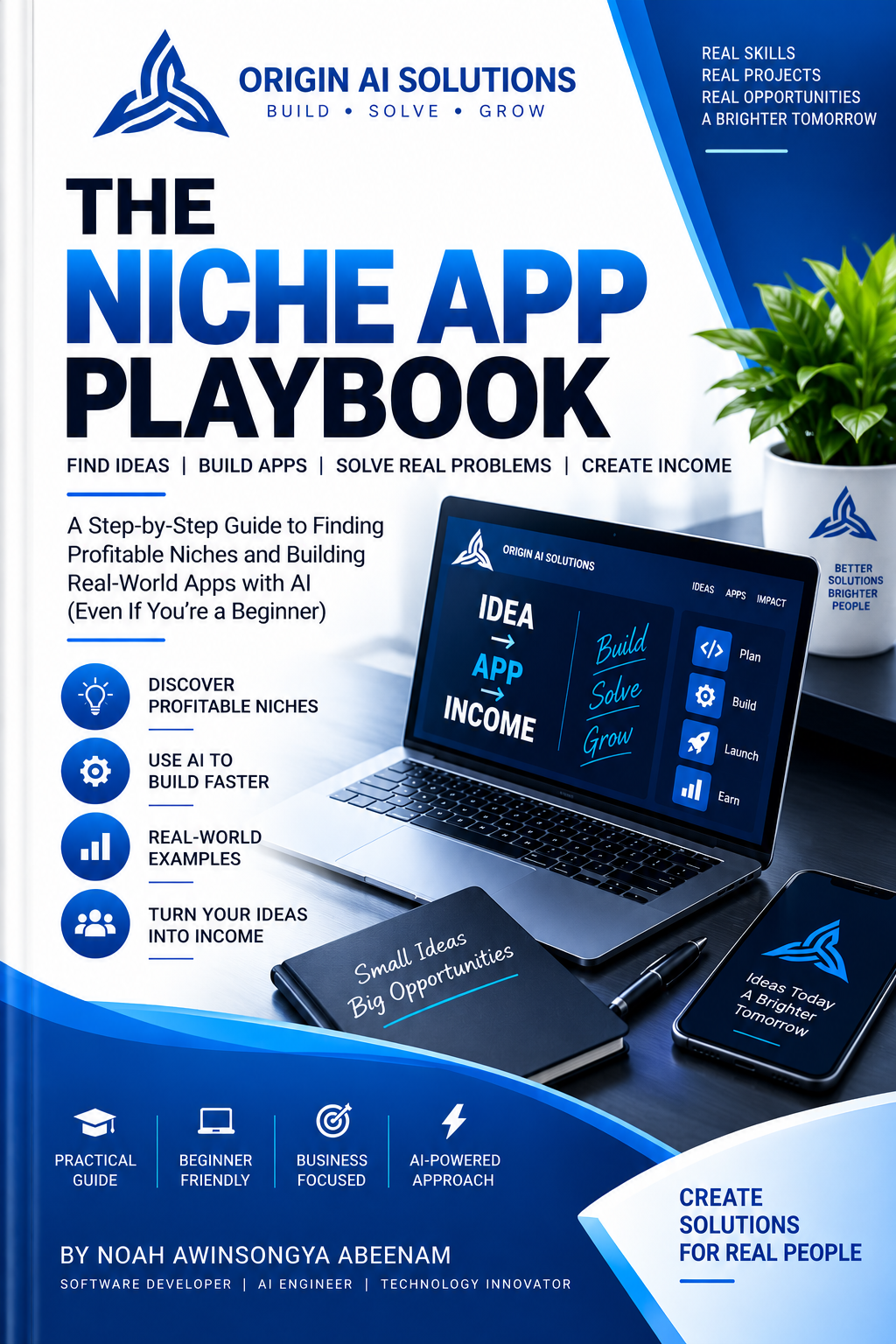
Find a real problem. Plan a focused app.
Learn how to identify real business problems, evaluate niche app opportunities, validate demand, plan a focused MVP, and develop a practical path towards your first customer.
28 topics · Worksheets & scorecards · An 8-step method
AN APP IDEA IS NOT ENOUGH
An idea is a starting point—not evidence of demand. Before writing requirements or asking AI to build, understand who needs the solution and how their business works today.
Trying to serve everyone makes it harder to understand a specific business and the problems it faces.
A feature list cannot tell you where a business loses time, repeats work or makes mistakes. Conversations and workflow research can.
Too many features distract from the one workflow you need to build, test and explain first.
THE PLAYBOOK APPROACH
The Niche App Playbook connects niche research, validation, MVP planning, AI-assisted building, testing and customer outreach. Work through the guide with your own idea, using the worksheets and examples to turn broad assumptions into a more focused plan.
The Playbook brings its topics together in one method, taken directly from the guide.
Find a specific business type with visible activity and recurring operational needs.
Understand how the business works today and where friction occurs.
Confirm the problem is painful, recurring, and connected to willingness to pay.
Choose one workflow and define the smallest useful MVP.
Use iterative development and AI-assisted tools where useful.
Test with realistic data and create evidence.
Approach businesses with the outcome, not a technical feature list.
Standardise what works so future customers need configuration rather than a full rebuild.
INSIDE THE GUIDE
Every numbered topic in the guide, in its original order. Topics marked “Worksheet” include a practical exercise to complete as you go. The guide also includes a worked cold-store example, three short examples, a case study builder, and a final action worksheet.
Learn why a useful app begins with a real problem rather than an idea for software, and how business workflows reveal where information is lost, duplicated, delayed, or handled manually.
Understand why focusing on a specific type of business gives you a clearer customer, recognisable workflows, and problems you can understand deeply.
Explore where business activity is visible, shortlist 3–5 niches, and check whether you can reach the owners, learn the workflow, and find repeated problems.
WorksheetScore an opportunity on four filters: expensive pain, recurring pain, whether a realistic budget exists, and whether a messy workflow is currently doing the work.
WorksheetTalk to real people about what they do today, ask where time is lost and mistakes happen, and gather evidence before presenting a solution.
WorksheetScore frequency, financial impact, frustration, current workaround, willingness to change, and ability to pay — while remembering evidence matters more than a number.
WorksheetMap a process from beginning to end and identify where information enters, changes, gets approved, and where mistakes are most likely.
WorksheetUnderstand why one focused workflow is easier to build, explain, test, sell, and improve than a large unfinished system.
Use DATA → SCREENS → ACTION to define what must be stored, what users must see, what they must do, and the one useful outcome.
WorksheetPrioritise the essentials and delay advanced analytics, complex integrations, and cosmetic extras until the core problem is proven.
Plan the records your system needs — such as users, staff, products, customers, and transactions — and, for multi-business products, ownership, permissions, and data separation.
Use AI as a development partner through a loop: describe the workflow, define requirements, generate, inspect, test with realistic data, correct, and repeat.
Build and test one meaningful slice at a time before moving forward.
Test core actions, permissions, errors, mobile usability, and basic reporting — and have someone who did not build the app try it.
Prepare genuine evidence — realistic demo data, screenshots, a walkthrough, a pilot, or a before/after workflow — before making large claims.
Start close to the problem through personal networks, local businesses, communities, referrals, and direct outreach — and ask questions before pitching.
WorksheetCommunicate the business outcome, such as fewer mistakes, faster work, or better visibility, rather than leading with technical features.
Explore pilots, setup projects, monthly fees, and optional support, pricing around value, effort, and the customer's ability to pay.
WorksheetAfter one customer succeeds, identify which screens, workflows, permissions, reports, and settings can be standardised.
Move from building a different app for every customer towards a proven solution that needs more configuration and less new development.
Review the full journey: niche → pain → workflow → MVP → proof → customer → product.
Follow a seven-day plan covering niche research, conversations with real people, problem selection, workflow mapping, a first build, testing, and customer feedback.
Fill in your niche, target customer, main problem, current workaround, core workflow, MVP outcome, first-customer channel, and pricing ideas.
WorksheetList your first prospects, the problem you will ask about, the proof you can show, your first offer, and your next action.
Review common mistakes such as building before validating, serving everyone, adding too many features, ignoring permissions, and selling features instead of outcomes.
Check your readiness before building, during development, before selling, and after your first customer.
Follow a four-week plan: research and validate, build the core MVP, test and create proof, then contact businesses and collect feedback.
Start with a real problem, build the smallest useful solution, prove it, sell the result, and then productize what works.
REAL PRODUCT PAGES
Real pages from the final PDF. Select a page to view it larger.
The opening page and the first four topics, including a practical worksheet.
Tap the image to enlargeTopics 5–7 with the investigation checklist and the Validation Scorecard.
Tap the image to enlargeThe cold-store example that applies the method step by step, with its worksheet.
Tap the image to enlargePRACTICAL LEARNING OUTCOMES
Use the 4-Filter Niche Test to evaluate recurring pain, business impact, budget and existing workarounds.
Use investigation questions and the Validation Scorecard to assess the problem—not just your enthusiasm for the idea.
Map one workflow and organise its data, screens and actions around a specific outcome.
Plan genuine proof, identify potential customers and explain the business outcome instead of a list of features.
It does not guarantee customers, revenue, or profit — the guide itself states it is educational material.
WHO IT'S FOR
People who want to identify and evaluate an app opportunity before building.
It does not build or host an app for you. Detailed reusable AI build prompts are intentionally kept in the separate AI App Builder Prompt System.
GET THE PLAYBOOK
The Niche App Playbook
GH₵99
Branded PDF guide · Digital download, not a physical book
After verified payment, open the PDF from your private order page. An access link is also emailed to you. Keep your email and order reference for support.
A FEW QUESTIONS, ANSWERED
A practical PDF guide from Origin AI Solutions for finding a real business problem, validating it, designing a focused solution, building an MVP, creating proof, finding a first customer, and turning a successful solution into a repeatable product.
28 numbered topics, practical worksheets and scorecards, a worked cold-store example, three short examples, a case study builder, the 8-step Niche App Method, a 7-day challenge, a 30-day next-step plan, and a final action worksheet.
Yes. It is written as a step-by-step guide and does not assume you have built an app before.
No. The Playbook focuses on problems, validation, planning, and selling. Where it discusses building, it describes an AI-assisted, iterative approach rather than teaching code.
You can use the investigation, validation scorecard, and MVP sections to test and focus the idea before you spend time building it.
No. It is a guide with frameworks and exercises. It does not build or host an app.
No. The guide is educational material, not a guarantee of customers, revenue, or profit. Results depend on your market, execution, pricing, and other factors.
A branded PDF guide that you download after your payment is confirmed.
Pay securely on this website by mobile money or card through Paystack, using the email address you enter before checkout. After Paystack confirms your payment, the order page gives you a private link to your product.
Your product stays locked. A pending payment is checked again automatically on the order page and access appears only once Paystack confirms it. A failed or cancelled payment never unlocks the product — you can try again from this page.
Keep the address of your order page; it lets you open your product again after a confirmed payment. If you lose it, email originaisolutionsgh@gmail.com with your order reference or Paystack receipt.
The Playbook covers business problem discovery, validation, and product strategy. The Prompt System contains the detailed, reusable AI build prompts for the development workflow — the Playbook intentionally leaves those to it.
THE NICHE APP PLAYBOOK
A practical guide for finding a business problem worth solving, validating it, and planning a focused app around it.